Japan's Big-B plan: a major opportunity for Bangladesh's economy
Japan has proposed expanding cooperation with Bangladesh at its centre under the 'Bay of Bengal Industrial Growth' (Big-B) initiative. This opinion analyses the prospects in investment, infrastructure and technology transfer — and the challenges that must be faced.
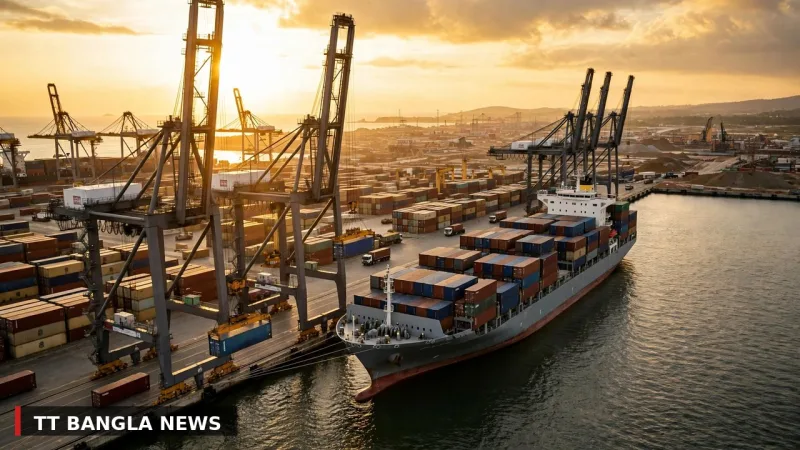
What Bangladesh could gain from Japan's proposal to scale up cooperation around the Bay of Bengal
The Japanese government has proposed expanding cooperation with Bangladesh at its centre under the 'Bay of Bengal Industrial Growth' or Big-B initiative. News of discussions on trade and investment during the Prime Minister's recent Japan visit has been published. This proposal is not merely diplomatic courtesy — it could be a structural opportunity for Bangladesh's economy, if used properly.
Why this initiative matters
Bangladesh now stands at a turning point of economic transformation. Reducing dependence on readymade garments, diversifying exports, developing infrastructure and industrialisation — meeting these three challenges requires large, long-term investment. Japan has historically been one of Bangladesh's most reliable development partners. Japanese financing and technical assistance in projects like the Matarbari deep-sea port, the metro rail and the Dhaka-Chattogram economic corridor have already proven that Japanese involvement means not just money but quality implementation.
The Big-B plan signals a broadening of this trajectory. It speaks of building an integrated framework of industry, trade and connectivity infrastructure around the Bay of Bengal. Bangladesh's geographic position — at the junction of South and Southeast Asia — naturally places the country at the centre of this plan.
Areas of possibility
First, investment. Japanese companies are seeking diversification away from China-centric supply chains — in this 'China plus one' trend, Bangladesh could be a promising destination. More Japanese investment in the special economic zones would bring both employment and technology transfer.
Second, infrastructure. Japanese assistance in ports, logistics and energy infrastructure could reduce Bangladesh's trade costs. Once projects like Matarbari operate at full capacity, both the cost and time of imports and exports will fall.
Third, technology and skills. Technical training and technology transfer through Japanese cooperation could raise the productivity of Bangladesh's workforce, improving export quality in the long run.
The challenges are no less
But alongside the opportunity, there are reasons for caution. Unless old problems are solved — land acquisition, regulatory complexity and uninterrupted energy supply for attracting large investment — investors' interest will remain on paper.
Another issue is debt dependence. A large part of Japanese financing is loan-based — without transparency in project selection and proper accounting of economic returns, the debt burden could grow in the future.
All in all, the Big-B plan has opened a window for Bangladesh. The question is whether light will come through this window, or merely air. The answer depends on the government's implementation capacity and policy continuity.
This opinion is the writer's own




Reader comments (0)
No comments have been published yet.